






| Quick Answer for Maintenance & Procurement Teams When a buyer searches for ABB DCS Spare Parts Germany, they typically need replacement modules for one of four ABB distributed control system platforms: Advant OCS, Freelance, Symphony Plus, or System 800xA. Germany’s process automation market is valued at $5.77 billion in 2025, with distributed control systems holding the dominant system-type share of the country’s factory automation market (Spherical Insights, 2025). Automabuy supplies new, refurbished, and repaired ABB DCS spare parts to plants across North Rhine-Westphalia, Bavaria, and Baden-Württemberg, with documentation suitable for German industrial procurement. |
A control room operator in a Rhine Valley chemical plant rarely thinks about distributed control systems until the moment one stops working. An obscure communication card fails at 2 a.m., the spares cabinet doesn’t have a replacement, and suddenly a process that has run reliably for fifteen years is one unsourced component away from an unplanned shutdown. This scenario plays out across German industry more often than most people outside plant maintenance realize, and it is precisely why a dependable source of ABB DCS Spare Parts Germany facilities can count on matters as much as the original system design itself.
Germany runs an unusually large installed base of ABB distributed control systems, spanning four decades of platform generations — from legacy Advant OCS installations still controlling reactors in older Ruhr Valley chemical complexes to brand-new System 800xA deployments at modern facilities. This guide explains what spare parts you actually need, why DCS obsolescence happens the way it does, and how to source genuine and refurbished parts without gambling your plant’s uptime on a single supplier.
Why Germany Has One of Europe’s Largest ABB DCS Installed Bases
Germany is not simply a large industrial economy — it is a process industry stronghold built around chemicals, power generation, and precision manufacturing, all sectors that rely heavily on distributed control systems rather than simpler PLC-only architectures. North Rhine-Westphalia alone produces 38% of Germany’s crude steel and serves as the country’s strategic chemical sector hub, concentrating an enormous density of process plants within a relatively compact geographic corridor.
DCS Dominates Germany’s Automation Landscape
Within Germany’s factory automation and industrial controls market, distributed control systems hold the dominant share among system types, ahead of standalone PLC and SCADA architectures. This dominance reflects the nature of German process industry itself: continuous chemical production, power generation, and pharmaceutical manufacturing all depend on the deterministic, tightly coupled control loops that DCS architecture is purpose-built to deliver, where hundreds of control loops must execute in lockstep across a plant-wide system.
A Market Still Anchored in Hardware
Despite the well-publicized shift toward predictive maintenance software and digital twins, hardware still captured the majority of 2025 European process automation revenue, with distributed control systems and programmable logic controllers forming the physical control core of continuous plants. This matters directly for spares planning: software subscriptions don’t fail at 2 a.m., but a twenty-year-old I/O card can, and the hardware layer remains the part of the system most exposed to obsolescence risk.
Understanding ABB DCS Obsolescence: Why Spare Parts Get Harder to Find
Obsolescence in distributed control systems is rarely a single event. It is a gradual, predictable process that follows a well-documented pattern, and understanding that pattern is the difference between proactive spares planning and a panicked search during an unplanned outage.
The Obsolescence Curve: How It Actually Unfolds
The process typically begins when ABB formally discontinues a platform — moving it from active to classic, then to limited, and eventually to obsolete support status. New parts production stops first. Counter-intuitively, prices for remaining inventory often rise immediately at this point, not gradually, because the available supply suddenly becomes fixed rather than renewable. Over the following years, the market shifts toward refurbished and repaired parts as the dominant supply channel, and eventually, when even those sources become too scarce or expensive, plants are forced into a system replacement or full migration decision.
Where German Plants Sit on This Curve Today
- System 800xA: current generation, full ABB factory support, new parts widely available
- Symphony Plus: current generation, active migration target for Bailey INFI 90 legacy systems
- Freelance (AC 700F / 800F): mature but still supported, parts generally accessible
- Advant OCS (AC 410 / AC 450): legacy status, new stock largely exhausted, refurbished parts now the primary source
- Bailey INFI 90 (ABB-inherited legacy): highest obsolescence risk, oldest installations concentrated in power and paper industries
A meaningful number of German chemical and power plants commissioned in the 1990s and early 2000s still run Advant OCS or INFI 90-derived systems today, often because the underlying process equipment itself has decades of remaining service life and a full control system replacement is a disproportionate capital expense relative to the risk it addresses.
ABB DCS Platforms and the Spare Parts They Require
Each ABB DCS generation uses a distinct hardware architecture, so spare parts are rarely interchangeable across platforms. The table below maps the major ABB DCS families to the spare part categories German plants most commonly request.
| ABB DCS Platform | Era / Status | Common Spare Categories | Typical German Plant Use |
| System 800xA | Current generation | AC 800M controllers, I/O modules, S800/S900 I/O | Chemicals, pharma, power — new installs & upgrades |
| Symphony Plus | Current generation | INFI 90 compatible cards, HRC controllers | Power generation, utilities — migration target |
| Freelance 800F / AC 700F | Mature, supported | CPU modules, communication modules, power supplies | Mid-size chemical & process plants |
| Advant OCS / AC 410/450 | Legacy, end-of-life | CI810, CI820, TB840 boards, controller cards | Long-running plants pre-2010 installation |
| Bailey INFI 90 (ABB legacy) | Legacy, obsolescence risk | NIS modules, NKTU communication cards | Older power plants, steel & paper mills |
System 800xA: The Current Standard
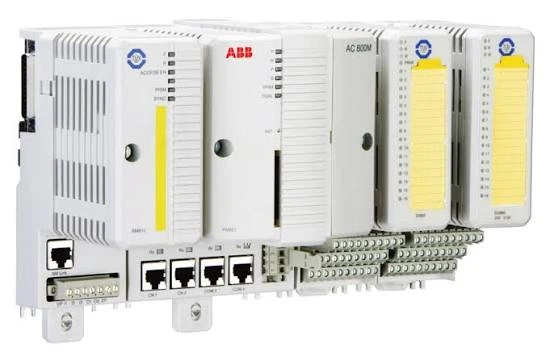
System 800xA is ABB’s current-generation DCS platform and the natural migration target for plants moving off legacy systems. Spare parts — AC 800M controllers, S800 and S900 I/O modules, and associated communication interfaces — are factory-supported and generally available through authorized channels with standard lead times. For new builds and major upgrades across German chemical and pharmaceutical facilities, 800xA is now the default specification.
Symphony Plus: The Power Generation Workhorse
Symphony Plus serves as both a standalone modern platform and the designated migration path for plants still running Bailey INFI 90 systems, since it maintains backward compatibility with INFI 90 I/O in many configurations. This compatibility is a meaningful advantage for German power generation and utility operators, allowing a phased migration rather than a disruptive rip-and-replace project.
Freelance: The Mid-Size Plant Standard
Freelance (AC 700F and AC 800F controllers) remains widely deployed across mid-size German chemical and process plants. The platform sits in a comfortable position on the obsolescence curve: mature enough that pricing has stabilized, but still factory-supported, meaning spare CPU modules, communication interfaces, and power supplies are accessible without resorting exclusively to the refurbished market.
Advant OCS: Managing a Legacy Platform Responsibly
Advant OCS, built around the AC 410 and AC 450 controller families, represents the platform where spares strategy matters most. New factory production has effectively ended, which means CI810 and CI820 communication interface boards, TB840 termination units, and controller cards now come almost exclusively from refurbished inventory or component-level repair. Plants still running Advant OCS should treat spares sourcing as an ongoing operational priority rather than a reactive response to the next failure.
Sourcing ABB DCS Spare Parts Germany Plants Can Depend On
Finding a part number is the easy part. The harder problem is sourcing ABB DCS Spare Parts Germany maintenance teams can trust to actually work when installed — genuine or properly tested refurbished hardware, not a mislabeled substitute that fails within weeks. Several factors separate a dependable supplier from a risky one in this category.
Verified Testing, Not Just “Pulled and Cleaned”
A refurbished DCS module that has simply been wiped down and repackaged is fundamentally different from one that has been functionally tested against the original specification. For control system hardware running safety-relevant chemical or power processes, the difference between these two standards of refurbishment can determine whether a replacement part lasts five years or fails on first power-up.
Cross-Reference Accuracy Across Platform Generations
ABB part numbering has changed across decades of DCS evolution, and modules are frequently rebranded or revised without an obvious naming change. A supplier who understands the platform-specific cross-references — knowing precisely which Symphony Plus module is backward-compatible with a given INFI 90 slot, for instance — saves a plant from ordering a part that physically fits but doesn’t function correctly within the control architecture.
Documentation for German Industrial Procurement
German plants, particularly those operating under regulated frameworks in chemicals and pharmaceuticals, require clean documentation trails for replacement parts: test reports, conformity statements, and traceable sourcing. A supplier who treats this as a standard part of the quotation, rather than an afterthought requested after the fact, materially reduces procurement friction.
Automabuy supplies exactly this combination to German buyers: genuine, refurbished, and repaired ABB DCS spare parts across the Advant OCS, Freelance, Symphony Plus, and System 800xA platforms, sourced and tested with the documentation German industrial procurement processes require, and quoted with realistic delivery timing rather than optimistic guesses.
Conclusion
ABB distributed control systems will continue running critical processes across German chemical, power, and manufacturing plants for years to come, including platforms ABB itself has already moved into legacy support status. That reality makes spares strategy a permanent operational discipline rather than a one-time purchasing decision. Understanding where a given system sits on the obsolescence curve — and whether new, refurbished, or repaired parts are the realistic sourcing path for it — is the foundation of keeping a plant running without overpaying for parts or accepting unverified substitutes.
For plant engineers and procurement teams managing a mixed fleet of Advant OCS, Freelance, Symphony Plus, and System 800xA hardware, the practical takeaway is straightforward: build a spares relationship before an emergency forces one. A supplier who already understands your specific platform, tests every refurbished module against original specification, and can quote realistic lead times turns a potential unplanned shutdown into a routine maintenance event.
Automabuy supplies that relationship to German plants — genuine and refurbished ABB DCS spare parts, accurate cross-referencing across platform generations, and documentation suited to German industrial procurement. Whether the need is a single CI810 board for a legacy Advant OCS cabinet or a planning conversation about a phased System 800xA migration, reach out with your module description or part number, and the team will respond with real availability rather than a generic catalogue listing.
| ⚙️ Need ABB DCS Spare Parts Fast? Automabuy sources genuine, refurbished, and cross-compatible spare parts for ABB distributed control systems — Advant OCS, Freelance, Symphony Plus, and System 800xA — for plants across Germany. From a single obsolete card to a full cabinet refresh, our team identifies the correct part number and responds with availability and pricing within hours, not weeks. Contact us today: 📧 Email: sales@automabuy.com 💬 WhatsApp: +91 7678371986 🌐 Website: automabuy.com 📍 A-24/5, 3rd Floor, NH-19, Mohan Cooperative Industrial Estate, New Delhi 110044 |
Frequently Asked Questions
Where can I find genuine ABB DCS spare parts in Germany?
Automabuy supplies genuine, refurbished, and cross-compatible spare parts for ABB distributed control systems to plants across Germany, including chemical sites in North Rhine-Westphalia, power plants in Bavaria, and manufacturing facilities in Baden-Württemberg. We source parts for Advant OCS, Freelance, Symphony Plus, and System 800xA platforms, with documentation suitable for German industrial procurement and customs requirements.
What happens when ABB discontinues spare parts for an older DCS platform?
When ABB moves a DCS family into the end-of-life phase, new production of original spare parts stops, but the system does not become unusable overnight. Obsolescence is gradual: prices for remaining stock rise as supply tightens, refurbished and repaired parts become the primary source, and plants typically have a multi-year window to plan a migration or secure a reliable spares supply before parts become genuinely scarce.
What is the difference between new, refurbished, and repaired ABB DCS spare parts?
New spare parts are unused stock manufactured to original specification, typically available for current-generation platforms like System 800xA. Refurbished parts are previously used modules that have been tested, cleaned, and restored to working specification — a cost-effective option for legacy platforms like Advant OCS where new stock no longer exists. Repaired parts are customer-owned faulty modules sent for diagnosis and component-level repair rather than full replacement.
Can I still get spare parts for ABB Advant OCS systems?
Yes, though availability depends on the specific module. Advant OCS (including AC 410 and AC 450 controllers) is a legacy platform, so new factory stock is largely exhausted. Refurbished CI810, CI820, and TB840 boards, along with tested controller cards, remain available through specialist suppliers. Plants still running Advant OCS should treat spares sourcing as a standing priority rather than a reactive emergency response.
How quickly can ABB DCS spare parts be delivered to a German plant?
Lead time depends on part availability and platform. Common spares for current-generation System 800xA and Freelance systems that are in stock can often ship within 2-5 business days. Legacy Advant OCS or Bailey INFI 90 modules requiring sourcing or refurbishment typically take 1-3 weeks. For unplanned outages, Automabuy prioritizes emergency requests and confirms realistic delivery timing immediately upon receiving the part number or module description.
Why are some ABB DCS spare parts unusually expensive for older systems?
Pricing for legacy DCS spares follows a predictable pattern once original production stops: scarcity drives an initial price increase even before stock physically runs out, because remaining inventory becomes a finite, non-renewable resource. As a system ages further, refurbishment and component-level repair become the dominant supply source, which carries its own labour and testing costs. This is a normal characteristic of industrial control system lifecycle economics, not a sign of an unreliable supplier.
Should I repair my legacy ABB DCS or migrate to System 800xA?
The right answer depends on remaining asset life, criticality of the process, and current spares availability for your specific platform. A control system audit comparing the net present value of continued maintenance against a phased migration is the standard approach used by reliability engineers. Many German plants extend the life of Advant OCS or Freelance systems by several years through a disciplined spares strategy before committing to a full System 800xA migration.