






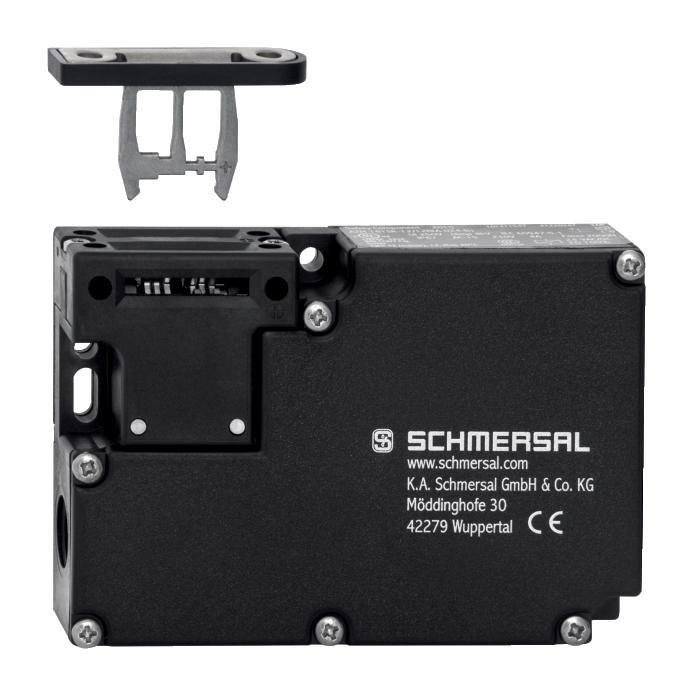
A guard door that isn’t reliably monitored is not a safety feature – it’s a false sense of one. That single point of failure is exactly why safety switches sit at the front line of every properly guarded machine, detecting the moment an enclosure, gate, or access panel is opened and feeding that signal straight into the safety circuit. As a specialist Schmersal Safety Switch Supplier, Automabuy sources genuine Schmersal switches – from basic hinge- and tongue-operated types to solenoid-locking and RFID-coded variants – with full compliance documentation and technical selection support built around your machine’s actual risk profile. This guide walks through how safety switches work, the main product families available, how to select the right one, and why the supplier behind the part matters just as much as the switch itself.
What Is a Machine Safety Switch?
A safety switch is an electromechanical or electronic device mounted on a movable guard, door, or access panel that reports the guard’s position – open or closed – to a safety relay or safety PLC. When the guard opens, the switch breaks a monitored circuit, and the connected control system responds by cutting power to hazardous motion. Depending on the application, the switch may simply detect position (basic interlocking), or it may also physically lock the guard shut until a hazard has cleared (solenoid interlocking). Schmersal’s range covers both categories extensively, certified to EN ISO 14119 for guard interlocking devices and rated with defined Performance Levels (PL) under ISO 13849-1.
Main Categories of Schmersal Safety Switches
| Switch Type | Function | Typical Application |
| Hinge Switches | Detect guard position via the door’s own hinge mechanism | Hinged enclosure doors |
| Tongue-Operated Switches (AZ Series) | Detect guard position via a separate coded tongue actuator | Sliding and hinged guards |
| Solenoid-Locking Switches (AZM Series) | Detect position and physically lock the guard closed | High-inertia or run-down hazards |
| RFID Coded Sensors | Non-contact, tamper-resistant position sensing | Hygienic and washdown environments |
| Magnetic Safety Switches | Non-contact detection for lightweight or flexible guards | Curtains, flexible barriers |
Why the Right Schmersal Safety Switch Supplier Matters
Because every safety switch carries a certified Performance Level or Safety Integrity Level rating, its legitimacy depends entirely on the part being genuine, correctly wired, and properly documented. A counterfeit or grey-market switch can look identical externally while lacking the certified internal contacts or coded actuator logic that makes its safety rating valid – a gap that often only surfaces during an audit or, worse, after an incident. A knowledgeable Schmersal safety switch supplier catches mismatched wiring categories, incorrect actuator codes, and outdated part revisions before they ever reach your control panel, something a generic industrial parts reseller has little reason to check for.
How to Select the Correct Safety Switch
Switch selection should always begin with a risk assessment of the specific guard and hazard, not a catalogue search. Key questions to work through include:
● Does the guard need locking (interlocking) or simple position detection?
● What Performance Level (PL) or SIL rating does the hazard legally require?
● Is the environment washdown, high-vibration, or hazardous-area rated?
● Is the guard hinged, sliding, or a flexible barrier – which determines actuator type?
● Will the switch integrate with an existing safety relay or PLC network?
Getting any one of these wrong is one of the most common reasons a genuinely purchased switch still fails a safety audit. The part was correct, but the configuration didn’t match the actual hazard it was guarding.
Key Benefits of Sourcing Genuine Schmersal Switches
● Certified Performance Levels (PL c-e) and SIL ratings across the full product range
● Robust IP65/IP67-rated housings for harsh industrial environments
● Tamper-resistant coded actuators that resist guard defeat
● Broad compatibility with PROTECT safety relays and standard safety PLCs
● Proven long-term mechanical and electronic reliability
Industries That Depend on Certified Safety Switches
Automotive manufacturing plants use tongue-operated and solenoid-locking switches extensively around robotic welding cells and stamping presses, where guard integrity is non-negotiable. Food and beverage processing facilities rely on hygienic RFID and magnetic switches that withstand repeated washdown cycles without losing signal reliability. Packaging and logistics operations depend on switches integrated with light curtains around high-speed conveyor and palletising equipment, while heavy industry and metal processing plants specify ruggedised hinge and tongue switches built to survive vibration, dust, and temperature extremes. Renewable energy operators increasingly apply Schmersal switches to access hatches and switchgear enclosures on wind turbines and solar installations, reflecting how broadly certified guard monitoring now extends across modern industry.
The Automabuy Sourcing Process
When you order a safety switch through Automabuy, our technical desk first confirms the correct switch type, actuator coding, and PL/SIL rating against your stated application before a quote is even issued. Every unit shipped is traceable to an authorised Schmersal channel, arrives with compliance documentation, and carries a manufacturer warranty. For clients managing multiple guarded access points across a facility, we maintain a record of previously supplied switch variants per machine, so replacement orders are fast and accurate instead of requiring a fresh investigation each time a unit needs swapping. Urgent downtime situations are prioritised for expedited dispatch wherever inventory allows.
Frequently Asked Questions
What is the difference between a hinge switch and a tongue-operated switch?
A hinge switch detects guard position through the door’s own hinge, while a tongue-operated switch uses a separate coded actuator inserted into the switch body – the right choice depends on the guard’s mounting and required tamper resistance.
Do all Schmersal safety switches include a locking function?
No. Basic hinge and tongue-operated switches only detect guard position, while AZM-series solenoid switches add a locking function that physically prevents the guard from opening until a hazard clears.
Why does the supplier matter when buying a safety switch?
A specialist supplier verifies authenticity, confirms the correct PL/SIL rating for your application, and supplies compliance documentation – details a generic parts reseller typically cannot guarantee.
Can Automabuy help select the right switch for an existing machine?
Yes. Our technical team reviews your risk assessment and existing guard setup to recommend the correctly rated Schmersal switch, including cross-referencing for discontinued models.
How quickly can a replacement switch be shipped during unplanned downtime?
Automabuy prioritises urgent safety-critical orders and expedites dispatch wherever stock allows, minimising production downtime.
Conclusion
A safety switch may seem like a small, unremarkable component compared to the machinery it guards, but it is often the single point standing between normal operation and a serious injury. Sourcing it from a supplier who understands certification, application-specific selection, and genuine part traceability is not optional – it’s the foundation the rest of your safety system depends on. Automabuy’s technical sourcing team is ready to help you specify, quote, and deliver certified Schmersal safety switches for your next installation, retrofit, or emergency replacement.