






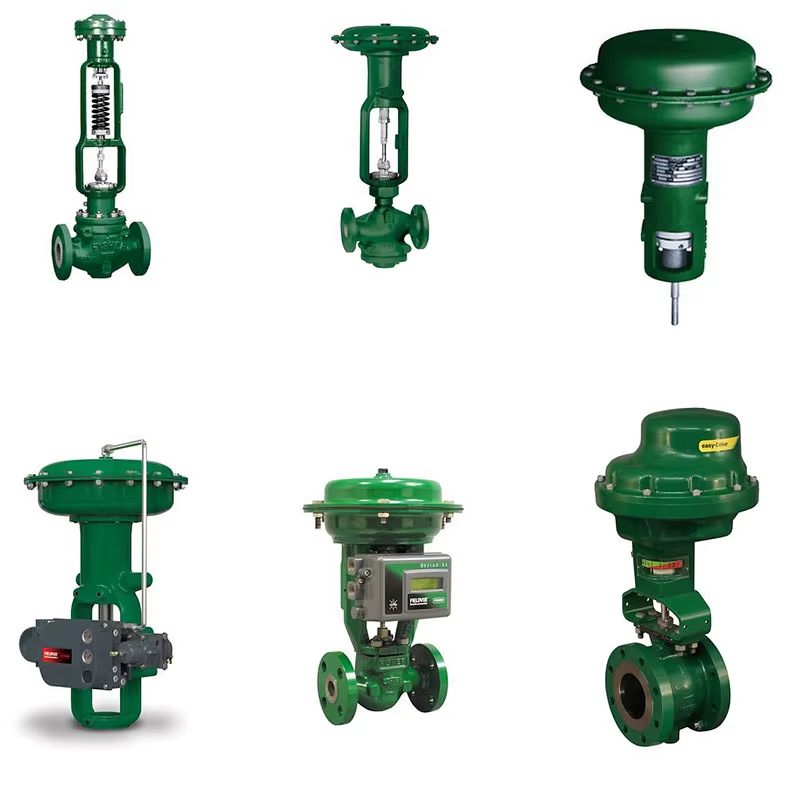
A control valve that has run reliably for a decade doesn’t fail because the whole valve wears out at once – it fails because one small internal component, a trim ring, a diaphragm, or a packing set, finally reaches the end of its service life while everything else around it is still perfectly serviceable. Replacing the entire valve in that situation is expensive and often unnecessary. That’s where genuine Fisher Valve Spare Parts come in. As a specialist supplier, Automabuy sources authentic Fisher trim, actuator components, positioners, and packing kits across the full product range, with technical cross-referencing and documentation that keeps your maintenance planning accurate. This guide covers the main categories of Fisher valve spare parts, how to identify what your specific valve needs, and why sourcing genuine components matters for process safety and performance.
Why Valve Spare Parts Wear Out Before the Valve Itself
Control valves are engineered so that the components most exposed to erosive flow, high-cycle actuation, or chemical attack are also the ones designed to be replaceable. Trim components – plugs, seats, and cages – bear the brunt of flow-induced erosion and cavitation damage. Diaphragms and O-rings degrade from repeated flexing and exposure to process media or ambient temperature extremes. Packing sets slowly lose their sealing ability from thermal cycling and stem friction. None of this means the valve body itself is failing; it means the wear parts have done their job and it’s time for a scheduled parts replacement rather than a full valve swap.
Core Categories of Valve Spare Parts
| Part Category | Function | Typical Wear Trigger |
| Trim (Plug, Seat, Cage) | Controls flow characteristic and shutoff | Erosion, cavitation, high cycling |
| Packing Sets | Seals the valve stem against process leakage | Thermal cycling, stem friction wear |
| Diaphragms & O-Rings | Seals actuator chambers and connections | Repeated flexing, chemical exposure |
| Actuator Springs & Seals | Provides actuator return force and containment | Fatigue over high-cycle service |
| Positioner Components | Ensures accurate valve position feedback and control | Electronic drift, mechanical wear |
How to Identify the Right Fisher Valve Spare Parts
Ordering the correct Fisher Valve Spare Parts starts with accurate valve identification, not a guess based on appearance. The valve’s nameplate typically carries the model number, size, trim number, and pressure class needed to identify compatible parts precisely. Where a nameplate is missing or illegible, cross-referencing against purchase records, prior work orders, or physical dimensions can usually confirm the correct part family before ordering.
● Record the full model number and size stamped on the valve nameplate
● Note the trim number and material designation, not just the valve body size
● Confirm actuator type and size separately from the valve body itself
● Check packing type against process temperature and media compatibility
● Retain old parts for physical comparison if documentation is incomplete
Why Genuine Parts Matter More Than They Seem To
A generic or non-OEM trim component can look dimensionally close enough to fit, while still delivering a different flow characteristic, a different pressure drop profile, or reduced cavitation resistance compared to the original design. In critical process applications, that difference can mean anything from reduced control accuracy to accelerated wear that brings the maintenance cycle forward by months. Genuine components are manufactured to the same tolerances and material specifications as the original valve design, preserving the performance characteristics the control loop was originally tuned around.
Industries That Depend on Fisher Valve Reliability
Oil and gas processing facilities rely on precisely maintained control valves for pressure regulation across separator trains, compressor stations, and pipeline metering skids where accuracy directly affects safety and throughput. Chemical and petrochemical plants depend on trim materials specifically rated for corrosive or erosive process media, making exact part matching especially important. Power generation facilities use Fisher valves extensively in feedwater and steam applications where high-cycle actuation accelerates wear on packing and trim. Water and wastewater treatment plants rely on properly sealed diaphragms and packing to prevent leakage in continuously operating control loops across the treatment process.
The Automabuy Sourcing Process
When you contact Automabuy for valve spare parts, our technical desk starts by confirming the exact model number, trim designation, and actuator type from your nameplate or existing documentation before quoting. Every part supplied is genuine, traceable to an authorised Fisher channel, and accompanied by material certifications where applicable. For facilities managing large valve populations across multiple process units, we maintain records of previously supplied parts per valve tag, so future maintenance orders are fast and accurate rather than requiring a fresh identification exercise every time. Urgent orders tied to unplanned valve maintenance are prioritised for expedited dispatch wherever inventory allows.
Frequently Asked Questions
How do I know which Fisher valve spare parts my equipment needs?
Start with the model number, size, and trim designation stamped on the valve nameplate – Automabuy’s technical team can help confirm compatible parts if documentation is incomplete or the nameplate is illegible.
Why replace trim instead of the whole valve?
Trim components like plugs, seats, and cages bear most of the erosive and cavitation-related wear, while the valve body typically remains serviceable for much longer, making trim replacement a cost-effective maintenance strategy.
Are non-OEM replacement parts a safe alternative?
Non-OEM parts can look dimensionally similar while differing in flow characteristics or material specifications, potentially affecting control accuracy and accelerating wear genuine parts preserve the original design’s performance.
Can Automabuy identify parts for an older or discontinued Fisher valve model?
Yes. Our technical team cross-references legacy model numbers and physical valve characteristics to identify the correct current-production equivalent parts where available.
How quickly can urgent valve spare parts be shipped?
Automabuy prioritises urgent process-critical orders and works to expedite dispatch wherever stock allows, minimising unplanned process downtime.
Conclusion
A control valve’s long-term reliability depends far more on the quality and accuracy of its replacement parts than most maintenance teams initially expect. Sourcing genuine Fisher Valve Spare Parts from a supplier who understands trim identification, material compatibility, and documentation isn’t an added cost it’s what keeps a valve performing exactly as it was originally engineered to. Automabuy’s technical sourcing team is ready to help you identify, quote, and deliver the correct spare parts for your next scheduled maintenance or emergency repair.