







Every megawatt matters. Whether the turbine is spinning inside a gas-fired power plant in the Middle East, a hydroelectric station along the Yangtze, or an offshore wind farm off the Scottish coast, the equipment measuring temperature, pressure, vibration, and flow determines whether that turbine runs at peak efficiency — or shuts down unexpectedly. That is exactly why choosing the right Turbine Instrumentation Supplier Worldwide is one of the most consequential procurement decisions any plant operator, EPC contractor, or maintenance team can make. The global demand for accurate, robust, and real-time measurement solutions has never been higher, and the suppliers that rise to meet it must bring engineering depth, broad geographic reach, and a portfolio that spans every turbine type and application.
What Does Turbine Instrumentation Actually Cover?
Turbine instrumentation is an umbrella term that encompasses every device and system designed to measure, monitor, protect, or control a rotating turbomachine. It is far broader than people assume when they first hear the phrase.
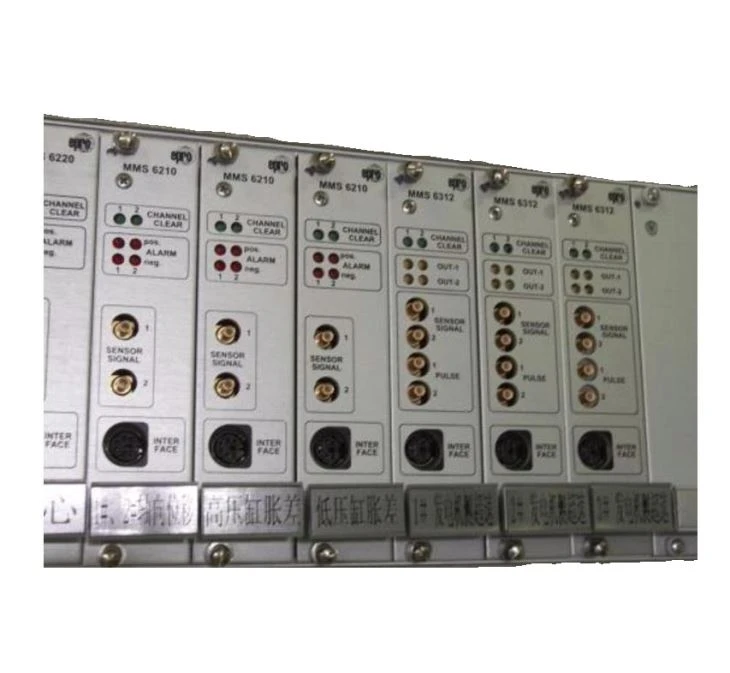
At its core, the category includes temperature sensors — thermocouples, RTDs, and thermistors — placed at inlet stages, exhaust ducts, bearing housings, and cooling circuits. Pressure transmitters and differential pressure cells track compressor maps and combustion stability. Vibration monitoring hardware, from proximity probes to accelerometers, feeds continuous data to protection relays that can trip a machine in milliseconds when abnormal oscillation appears. Speed pickups, torque sensors, and shaft encoders round out the rotating-machinery measurement stack.
Beyond individual sensors, modern turbine instrumentation also covers complete condition monitoring platforms: data acquisition units, signal conditioners, edge-computing nodes, and cloud-connected SCADA integrations. A full-service global supplier can deliver everything from a single replacement thermocouple to a turnkey health monitoring architecture covering an entire fleet of gas turbines across multiple continents.
Why Global Reach Defines a World-Class Supplier
Turbines operate in some of the harshest and most remote environments on Earth. Arctic LNG facilities, sub-Saharan geothermal plants, and deep-sea oil platforms all rely on turbomachinery — and when a sensor fails, replacement lead times measured in weeks can translate directly to lost revenue measured in millions of dollars.
A genuinely worldwide supplier solves this problem through several structural advantages. First, strategic stocking locations and regional distribution hubs reduce shipping distances and customs clearance delays dramatically. Second, locally certified field engineers can commission or troubleshoot instrumentation without the cost and scheduling friction of flying specialists across time zones. Third, compliance expertise covering ATEX, IECEx, SIL ratings, and region-specific pressure-vessel codes ensures that every shipment clears customs and satisfies local safety regulations without rework.
This geographic infrastructure translates directly into uptime for end users. When a bearing vibration sensor on a steam turbine at a combined-heat-and-power plant in Poland needs emergency replacement at 2 a.m., a supplier with a European logistics network and a 24/7 technical hotline delivers results that a purely domestic vendor simply cannot match.
Key Markets and Regional Demand Patterns
Middle East and North Africa
Gas turbine-driven power generation and petrochemical processing account for the bulk of instrumentation demand across the Gulf Cooperation Council region. High ambient temperatures require sensors rated beyond standard industrial ranges, and the prevalence of HAZARDOUS-area classifications means ATEX/IECEx compliance is non-negotiable. Suppliers with established presence in the UAE, Saudi Arabia, and Qatar benefit from proximity to major EPC hubs.
Asia-Pacific
Rapid industrial expansion — particularly in India, Vietnam, Indonesia, and Australia — is driving robust growth in both new turbine installations and retrofit projects. The diversity of turbine types here is striking: coal-fired steam turbines coexist with large-scale combined-cycle gas plants, small hydro units, and a fast-growing offshore wind sector. Suppliers that can handle cross-platform compatibility and offer multi-language technical documentation gain a measurable competitive edge.
Europe and North America
These mature markets are driven less by greenfield capacity additions and more by fleet life extension programs, digital upgrades, and decarbonization retrofits. Aging turbine fleets are receiving new vibration monitoring systems, wireless sensor nodes, and predictive analytics platforms. Suppliers capable of delivering both OEM-equivalent replacement parts and modern IIoT-ready monitoring systems are positioned well here.
Common Questions About Turbine Instrumentation — Answered
What is the typical lifespan of a turbine temperature sensor?
Under normal operating conditions, sheathed thermocouples in turbine exhaust applications typically last between 18 months and five years depending on exhaust gas temperature, vibration levels, and the sensor material selected. Platinum RTDs in cooler measurement points can last considerably longer. Planned replacement schedules aligned with major maintenance intervals — such as combustion inspections or hot-section overhauls — are more cost-effective than reactive replacement after failure.
How do vibration monitoring systems prevent unplanned shutdowns?
Continuous vibration monitoring tracks shaft displacement, bearing clearances, and structural resonance in real time. When readings drift beyond preset alarm thresholds, the system alerts operators long before the exceedance becomes catastrophic. Modern protection relays can escalate from alert to automatic machine trip within a single shaft revolution, preventing costly rotor damage that can take months and millions to repair.
What certifications should a turbine instrumentation supplier hold?
ISO 9001 quality management certification is a baseline expectation. Beyond that, look for ISO/IEC 17025-accredited calibration laboratories, functional safety credentials against IEC 61508 and IEC 61511 for SIL-rated protection loops, and hazardous-area approvals including ATEX, IECEx, FM, and CSA depending on the installation region. Traceability documentation for every calibration should be available on request.
How AI and Digital Twins Are Reshaping Turbine Monitoring
Artificial intelligence is not replacing traditional sensor technology — it is amplifying it. Edge-computing nodes now process raw vibration and temperature data locally, running anomaly-detection algorithms trained on millions of hours of turbine operating data. These models can flag subtle pattern deviations weeks before a conventional alarm threshold would ever trigger.
Digital twin platforms integrate live sensor feeds with physics-based turbine models, allowing engineers to simulate the effect of changing operating conditions on component life without touching the actual machine. A compressor fouling event that would previously require a borescope inspection can now be diagnosed remotely by comparing actual performance curves against the twin’s predicted baseline.
For procurement teams, this shift has a practical consequence: the sensor hardware you buy today must be compatible with the data architectures you plan to deploy tomorrow. Suppliers that offer open-protocol output — HART, Foundation Fieldbus, OPC-UA, or MQTT — future-proof your investment far better than proprietary closed systems.
Choosing the Right Turbine Instrumentation Supplier Worldwide for Your Project
Procurement decisions of this scale involve far more than comparing catalog prices. The following criteria separate suppliers that can support a plant through its full operating life from those that look competitive only on paper.
- Portfolio depth: Does the supplier cover all measurement parameters — temperature, pressure, vibration, speed, flow, and flame detection — or do you need to manage multiple vendor relationships?
- Calibration traceability: Are calibration certificates traceable to national metrology standards, and does the supplier maintain an accredited in-house laboratory or use an independently accredited third-party lab?
- Hazardous-area certification: Does their product range cover Zone 0/1/2 and Division 1/2 classifications, and are certifications current — not expired from legacy product lines?
- Inventory and lead time: Where are regional stocking hubs located, and what are guaranteed lead times for emergency orders versus standard procurement cycles?
- Technical support depth: Is there 24/7 phone support staffed by application engineers — not just call-center agents — for critical troubleshooting scenarios?
- Digital integration capability: Can their sensors and transmitters communicate natively with DCS/SCADA platforms from major automation vendors, or does integration require additional hardware and programming effort?
- Long-term product support: What is the published product discontinuation policy, and is there a migration path when legacy sensors reach end-of-life?
Price, of course, matters. But total cost of ownership — encompassing installation, calibration, maintenance, emergency replacement, and the cost of even one unplanned shutdown — consistently favors suppliers that score well across the criteria above, even when their unit prices sit slightly above the lowest tender.
Final Thoughts
Turbine instrumentation is the sensory nervous system of industrial power generation. When it functions with precision, operators see clearly, machines run reliably, and maintenance teams make decisions based on data rather than guesswork. When it fails — or was never properly specified — the consequences ripple through production schedules, maintenance budgets, and ultimately the bottom line.
The global market has matured to the point where the distinction between suppliers is less about whether they can provide a thermocouple and more about whether they can support a plant’s entire instrumentation lifecycle, adapt to evolving digital architectures, and show up reliably when urgency demands it. Finding a partner with that combination of technical breadth, geographic reach, and organizational responsiveness is the real objective behind every serious procurement process in this space.