







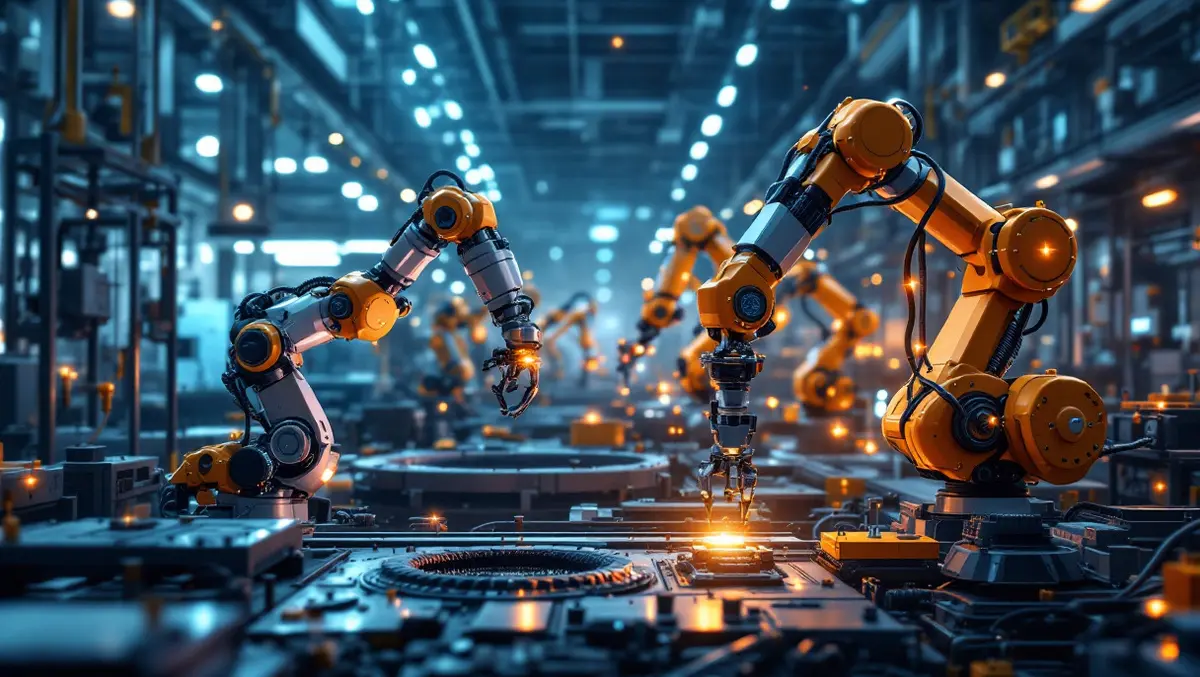
India is quickly becoming one of the most promising manufacturing destinations in the world. With the help of government-driven campaigns like Make in India, along with a rising middle class and increased demand globally for efficient manufacturing processes, industries in India are experiencing a revolution of technology. Behind all of this change, there is a strong power at play, which is revolutionising factories and production lines in India – intelligent machines and systems.
Why Industrial Robotics and Automation in India Is the Future
Industrial Robotics and Automation in India have changed dramatically within the past decade from an abstract concept to an essential requirement for businesses in India. Areas such as automobile manufacturing, pharmaceutical industries, electronic devices, the food industry, and textiles are adopting robotics in full force. Industry 4.0 – incorporating the Internet of Things (IoT), artificial intelligence, and cyber-physical systems – is making its way into Indian industries in a big way. India stands out among the fastest-growing markets for robots in Asia. As per reports by the International Federation of Robotics (IFR), robots installed in India are increasing each year, with the automobile and electronics industry leading the pack. Competition in meeting global quality standards at lower costs is the major motivation behind adopting robotic systems in India.
Government Initiatives and Policy Support
Several initiatives have been instrumental in ensuring that the Indian government is playing a vital part in the development of Industrial Robotics and Automation in India. Financial incentives are provided to producers under the Production Linked Incentive (PLI) policy, which encourages the adoption of automation through improved technology and increased production levels. Also, the National Mission for Transformative Mobility and Battery Storage encourages the use of automation in the production of electric vehicles.
Special Economic Zones (SEZ) and industrial corridors such as the Delhi-Mumbai Industrial Corridor (DMIC) are among the other initiatives being used to attract investments from foreign countries and bring in automation.
Challenges and the Road Ahead
Even though there is rapid growth, Industrial Robotics and Automation in India still have a few issues that need to be addressed. The high cost associated with the initial investment in the technology continues to pose a challenge to many medium-sized businesses. Skill scarcity, where the lack of technical staff trained on robotic programming and maintenance is another issue.
However, these challenges are being dealt with through industry-academia collaboration and training programmes sponsored by the government. With increased affordability and accessibility of automation technology, we expect the adoption to become very steep through 2030.
Business and Investment Opportunities
As far as the opportunities for businesses go, they are enormous for companies operating within the sphere of Industrial Robotics and Automation in India. Companies adopting automation early receive an enormous competitive advantage in terms of time to market, better product quality, less waste, and a safer environment for their employees. From the perspective of investment, the automation industry in India offers tremendous growth potential fuelled by macroeconomic factors.
The platforms offering to connect buyers with suppliers of industrial automation equipment are crucial in making access to such technologies available, especially for the manufacturers located in Tier 2 and Tier 3 cities.
How Industrial Robotics and Automation in India Drives Growth
How Industrial Robotics and Automation in India are revolutionising the manufacturing industry by assisting companies in enhancing their productivity, accuracy, and efficiency. With the rise in the adoption of new technologies in the industry, automation has now become essential in ensuring that the companies remain competitive and meet the rising demands in the market. The applications of robotics in the industry include automotive and electronics, pharmaceuticals, and food processing, among others.
The increase in the demand for is attributed to the high demand for increased production, improved working conditions, and the need for product consistency. The current robotic technology allows for the efficient accomplishment of repetitive and complex tasks with minimum errors, hence the increasing adoption of robotic technology to ensure the success of the company in the future.
Industrial Robotics and Automation in India: Industry 4.0 Revolution
Industrial Robotics and Automation in India further become equally important in the context of smart manufacturing. Robotic automation along with intelligent control mechanisms facilitates real-time monitoring, predictive maintenance, and optimal resource utilisation. Such features allow organisations to save on expenses and improve their performance levels.
The implementation of Industrial Robotics and Automation in India will continue to grow as India moves closer towards Industry 4.0. Companies that adopt automation technologies can take advantage of increased efficiency and competitiveness. It is essential to invest in robotics and automation in order to be successful in future industrial environments.
FAQs
1: Define Industrial Robotics and Automation in India.
Using robots and automation for improvement of efficiency and productivity in manufacturing is known as industrial robotics and automation.
2: In which industries are industrial robots used in India?
Automotive, electronics, pharmaceuticals, food processing, packaging and metal manufacturing industries extensively employ robots.
3: State some advantages of industrial automation
It increases productivity, improves quality and reduces downtime and the cost of operations.
4: Explain the growth of industrial robotics in India.
Growth in industry is due to increased need for smart manufacturing, improved efficiency and adoption of Industry 4.0.
5: How do industrial robots enhance production?
Robots perform repetitive tasks very precisely, fast and reliably.
6: Is industrial automation applicable to small- and medium-sized business f irms?
Modern automation solutions are adaptable for businesses of all sizes.
7: What is the future of Industrial Robotics and Automation in India?
The future looks bright as adoption of automation in the manufacturing industry increases.
About Us
We are an exclusive organisation that provides a link between industrial automation technology and the Indian manufacturers. Our objective is to provide world-class robotics and automation technologies to all kinds of businesses in India in a cost-effective manner. Find out more about our vision, team and our effort towards revolutionising Indian manufacturing on the About Us page.
Contact Us
Searching for reliable solutions in Industrial Robotics and Automation in India? Our professionals are here to help you find suitable automation products, robotic spare parts, CNC components and industrial solutions for your business needs. Our company is aimed at providing high-quality products and reliable customer support to various industries in India. No matter what type of information you are looking for – product inquiry, technical assistance or customisation of automation systems – our specialists are always ready to help you. Contact us, and we will help you increase your efficiency, reliability and development using industrial robotics and automation solutions.
Conclusion
Industrial Robotics and Automation in India is not some distant dream; it has now become a reality which is transforming every nook and corner of the manufacturing sector in India. From the large automobile companies operating in Pune and Chennai to textile manufacturers in Surat and pharma companies in Hyderabad, the adoption of robotics is the competitive strength that will define this decade ahead. With the decreasing cost of technology, increased government support and availability of a skilled labour force, there is every reason for the adoption of robotic systems to pick up speed.