






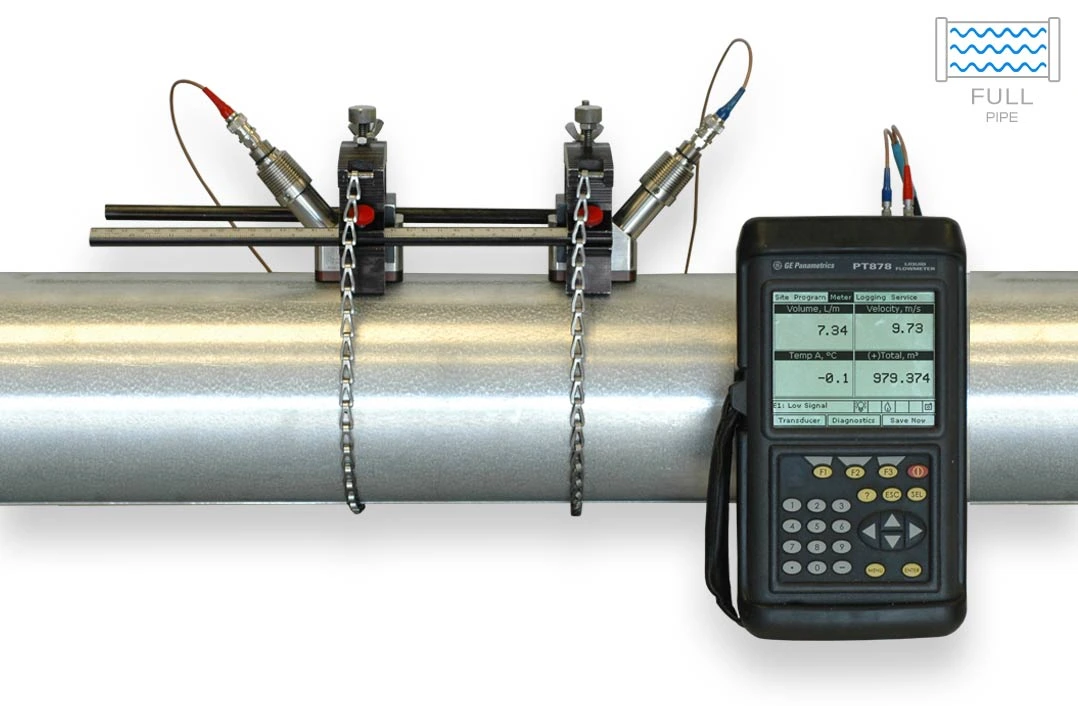
Measuring flow without ever touching the fluid inside the pipe sounds almost like a contradiction, but that’s exactly what ultrasonic flow measurement accomplishes, and it’s why this technology has become the preferred choice wherever a process can’t tolerate the pressure drop, wear, or maintenance burden of a mechanical meter. The Panametrics Ultrasonic Flow Meter line, now part of Baker Hughes, has built a strong reputation across liquid and gas flow applications precisely because it delivers accurate, non-intrusive measurement without moving parts in the flow path. As a specialist supplier, Automabuy sources genuine Panametrics meters across the clamp-on and inline product range, with application-specific sizing support and transparent pricing. This guide covers how ultrasonic flow measurement works, the main product configurations available, what drives pricing, and how to select the right meter for your application.
How Ultrasonic Flow Measurement Actually Works
An ultrasonic flow meter measures fluid velocity by sending ultrasonic sound pulses diagonally across the pipe between two transducers and measuring the time it takes each pulse to travel both downstream and upstream. Because a pulse travelling with the flow arrives faster than one travelling against it, that time difference is directly proportional to the fluid’s velocity, which the meter then converts into a volumetric flow rate using the pipe’s known cross-sectional area. Since there are no moving parts and, in clamp-on configurations, no wetted parts at all, the technology avoids the pressure drop, wear, and maintenance concerns associated with mechanical flow meters.
Clamp-On vs Inline Panametrics Ultrasonic Flow Meter Configurations
A Panametrics Ultrasonic Flow Meter is available in both clamp-on transducer configurations that mount externally on the outside of an existing pipe and inline spool-piece meters that are installed directly into the piping system. Clamp-on configurations are especially valuable for retrofits and temporary measurement, since installation requires no process shutdown or pipe modification, while inline meters typically offer tighter accuracy specifications for permanent, high-precision custody transfer or critical process applications where the additional installation effort is justified by measurement performance requirements.
Panametrics Models & Typical Pricing Range
| Model/Type | Best Suited For | Typical Price Range (USD) |
| Clamp-On Portable | Spot checks, temporary measurement, retrofits | $3,000 – $9,000 |
| Clamp-On Fixed Installation | Permanent non-intrusive monitoring | $6,000 – $18,000 |
| Inline Liquid Meter | High-accuracy permanent liquid measurement | $8,000 – $25,000 |
| Inline Gas Meter | Custody transfer and high-precision gas measurement | $15,000 – $50,000+ |
Pricing above reflects typical general-industry ranges and varies significantly based on pipe size, accuracy class, hazardous area certification, and specific application requirements Automabuy provides application-specific quotes rather than relying on generic price ranges for final purchasing decisions.
How to Select the Right Panametrics Configuration
Correct selection depends on matching meter type and configuration to actual application requirements rather than defaulting to whichever option is most familiar. Key factors to confirm before ordering include:
● Required accuracy class for the application – general monitoring versus custody transfer
● Whether clamp-on or inline installation better suits the process and access constraints
● Fluid type, temperature, and pipe material for correct transducer selection
● Hazardous area classification requiring appropriate certification
● Communication protocol requirements for integration with existing control systems
Underestimating the accuracy requirement is one of the more consequential oversights in flow meter selection — custody transfer and regulatory reporting applications typically require tighter accuracy classes than general process monitoring, and specifying the wrong class can create compliance problems well after installation.
Key Benefits of Genuine Panametrics Meters
● Non-intrusive measurement with no pressure drop or moving parts in the flow path
● Wide compatibility across liquid and gas applications, including challenging fluids
● Clamp-on options that eliminate installation-related process downtime
● Strong accuracy and repeatability for both monitoring and custody transfer use
● Compatibility with standard communication protocols for control system integration
Industries That Rely on Panametrics Flow Measurement
Oil and gas facilities use Panametrics meters extensively for custody transfer, allocation measurement, and general process monitoring across both liquid and gas applications. Water and wastewater utilities apply clamp-on configurations for non-intrusive flow monitoring across distribution and treatment systems. Chemical and pharmaceutical processing facilities rely on the technology’s non-intrusive nature to measure flow without introducing contamination risk or pressure drop into sensitive process lines. Power generation facilities use ultrasonic flow measurement across cooling water and process systems where reliable, low-maintenance monitoring supports overall plant efficiency.
The Automabuy Sourcing Advantage
When you order a flow meter through Automabuy, our technical desk reviews your fluid type, pipe specifications, and accuracy requirements before recommending a specific configuration and providing pricing rather than defaulting to a generic catalogue selection. Every unit shipped is genuine, traceable to an authorised Panametrics channel, and accompanied by documentation and a manufacturer warranty. For clients managing multiple measurement points across a facility, we maintain records of previously supplied configurations, making future capacity additions and replacements straightforward instead of a fresh specification exercise each time.
Frequently Asked Questions
How much does a Panametrics ultrasonic flow meter typically cost?
Pricing varies significantly by configuration, ranging from roughly $3,000 for a basic portable clamp-on unit to $50,000 or more for high-precision inline gas custody transfer meters – Automabuy provides application-specific quotes rather than generic pricing.
What’s the difference between clamp-on and inline flow meters?
Clamp-on meters mount externally on existing pipe without process shutdown, while inline meters install directly into the piping system and typically offer tighter accuracy specifications for demanding applications.
Can ultrasonic flow meters measure both liquids and gases?
Yes, Panametrics offers configurations specifically designed for both liquid and gas applications, with transducer and signal processing differences optimised for each fluid type.
Can Automabuy help select the right meter configuration for my application?
Yes. Our technical team reviews your fluid type, pipe specifications, and accuracy requirements to recommend the correctly configured Panametrics meter for your specific application.
Are Panametrics meters suitable for custody transfer applications?
Yes, select inline configurations meet the accuracy requirements typically needed for custody transfer and regulatory reporting applications in oil and gas service.
Conclusion
Non-intrusive, accurate flow measurement has become essential across industries where process integrity, minimal maintenance, and measurement precision all matter simultaneously, and ultrasonic technology delivers on all three fronts when correctly specified. Automabuy’s technical sourcing team is ready to help you specify, quote, and deliver the right Panametrics Ultrasonic Flow Meter configuration for your next installation or measurement upgrade.