






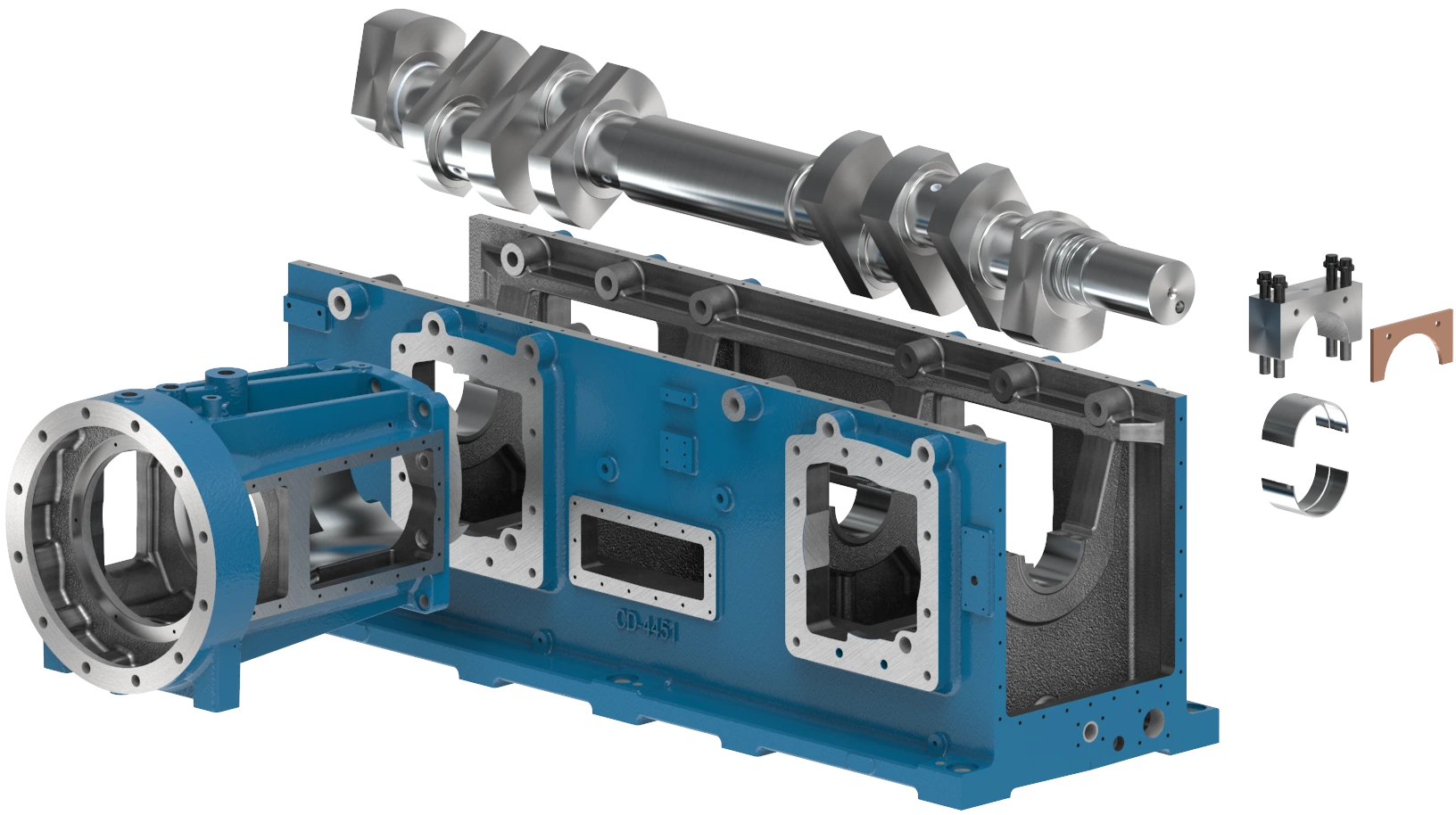
Ariel’s frame lineup spans a genuinely wide engineering range from the compact, high-speed JGT built for fast-cycling field applications through the versatile, widely deployed JGK that balances footprint and throughput up to the large, continuous-duty KBZ engineered for heavy transmission and processing service. A facility or field operator running a mixed fleet across these frames faces a real coordination challenge if parts sourcing happens through disconnected vendors who don’t understand how differently each frame’s wear dynamics actually behave. As a specialist Ariel Compressor Parts Supplier, Automabuy sources genuine cylinder components, valve assemblies, packing sets, and running gear across the full JGT, JGK, and KBZ range, all from one technically informed source. This guide covers how these three frame families differ, what each demands from a parts sourcing relationship, and why consolidating that relationship reduces both risk and long-term maintenance complexity.
Why One Frame Lineup Needs Three Different Sourcing Mindsets
It’s tempting to treat all Ariel compressor parts as a single category, but the JGT, JGK, and KBZ frames each demand a genuinely different specification mindset. The JGT’s high cycle rate leaves little margin for tolerance deviation on valves and rings. The JGK’s broad deployment across varied gathering and boosting duties means gas composition and duty cycle details matter as much as the frame model itself. The KBZ’s continuous, multi-year operating campaigns put load-bearing capacity and long-term fatigue resistance ahead of the cycle-rate concerns that dominate smaller frames. A supplier who treats all three the same way is missing exactly the details that matter most for each.
JGT Compact, High-Speed Precision
The JGT frame’s higher operating speed means valve plates, piston rings, and packing experience more stress cycles per hour than larger frames, making precise speed-rated component matching especially consequential. Genuine parts engineered to the JGT’s actual operating parameters preserve the reliability margin the frame was designed around.
JGK Versatile Mid-Range Workhorse
The JGK’s broad deployment across gathering, boosting, and processing applications means individual units, even within the same fleet, can have meaningfully different gas composition and duty cycle profiles. Correct parts matching benefits from reviewing each unit’s actual compression data sheet rather than assuming uniform specifications across a large field deployment.
KBZ Heavy-Duty, Continuous-Service Scale
The KBZ’s substantial horsepower and multi-year continuous-duty campaigns mean load-bearing capacity, bearing fatigue resistance, and large-bore component tolerances take priority over cycle-rate considerations. Components here need to hold up reliably across extended operating intervals between major overhauls.
Frame Family Comparison
| Frame Series | Defining Characteristic | Primary Sourcing Priority |
| JGT | Compact, high-speed, fast-cycling | Speed-rated component matching |
| JGK | Versatile, widely deployed across varied duty | Application-specific gas & duty cycle review |
| KBZ | Large, continuous-duty, heavy-load | Load-bearing capacity & fatigue resistance |
Why Consolidating Your Ariel Compressor Parts Supplier Relationship Pays Off
Sourcing parts for different Ariel frames from separate vendors often means no single party has full visibility into how a mixed fleet’s units are actually performing relative to each other, and a performance issue on one frame type can take longer to diagnose than necessary. Working with one Ariel Compressor Parts Supplier who understands the distinct engineering priorities of JGT, JGK, and KBZ frames means every order, regardless of which frame it’s for, gets reviewed against the right criteria, catching a speed-rating mismatch on a JGT or a duty-cycle mismatch on a JGK before it becomes a recurring maintenance problem.
How to Plan a Fleet-Wide Parts Sourcing Strategy
Operators managing a mixed Ariel fleet benefit from working through these questions together rather than sourcing parts unit by unit in isolation:
● Which frames in the fleet are JGT, JGK, or KBZ, and is documentation current for each?
● Are compression data sheets available and up to date for every unit, reflecting actual gas composition?
● Which units are approaching scheduled maintenance or major overhaul intervals?
● Would standardising documentation and parts tracking across the fleet reduce future sourcing time?
● What is the phased plan if a full fleet parts review can’t happen in a single pass?
Industries That Rely on a Mixed Ariel Fleet
Natural gas gathering and midstream operators frequently run JGT and JGK units across field compression while relying on KBZ frames at larger transmission points, making unified parts sourcing especially practical across the full operation. Gas processing plants often deploy a mix of frame sizes matched to different compression stages within the same facility. Vapour recovery and renewable natural gas operators increasingly use smaller JGT and JGK frames across distributed sites, while larger processing hubs may specify KBZ-class equipment. Petrochemical and refining facilities managing multiple compression trains benefit from one technical relationship spanning their full range of installed frame types.
The Automabuy Sourcing Advantage
Automabuy’s technical desk reviews your compressor fleet’s model designations, compression data sheets, and maintenance history together, regardless of whether a given order is for a JGT, JGK, or KBZ unit. Every part shipped is genuine, traceable to an authorised Ariel channel, and backed by material certifications and documentation. For operators managing fleets spanning multiple frame types across several sites, we maintain records of previously supplied parts per unit, so future maintenance orders build on complete service history instead of starting fresh each time a compressor needs attention.
Frequently Asked Questions
Can Automabuy supply parts across JGT, JGK, and KBZ frames as one relationship?
Yes. Our technical team reviews each frame type against its specific engineering priorities: speed rating for JGT, application duty cycle for JGK, and load capacity for KBZ within a single coordinated sourcing relationship.
Do JGT, JGK, and KBZ frames share any common parts?
Generally no. Each frame series has its own cylinder bore, valve, and running gear specifications, so parts are not interchangeable across frame types even when compressors appear similar externally.
Can Automabuy help maintain documentation across a mixed compressor fleet?
Yes. We can help track compression data sheets and previously supplied parts across your fleet, regardless of frame type, simplifying future maintenance and parts identification.
Is genuine equipment more important on some Ariel frames than others?
Genuine parts matter across all frame types, though the specific risk of non-genuine components varies. High-speed JGT frames are especially sensitive to tolerance deviations, while KBZ frames are especially sensitive to long-term fatigue resistance.
How quickly can Automabuy respond to urgent parts needs across a mixed fleet?
Automabuy prioritises urgent process-critical orders across all frame types and works to expedite dispatch wherever stock allows, minimising unplanned downtime.
Conclusion
Running a mixed Ariel compressor fleet means managing three genuinely different sets of engineering priorities, and treating them all the same in parts sourcing is exactly how avoidable maintenance issues creep into an otherwise well-run operation. Bringing JGT, JGK, and KBZ parts sourcing under one knowledgeable Ariel Compressor Parts Supplier removes that risk, ensuring every unit in your fleet gets parts matched to its actual engineering demands. Automabuy’s technical sourcing team is ready to help you specify, quote, and deliver a coordinated parts solution across your full Ariel compressor fleet.