







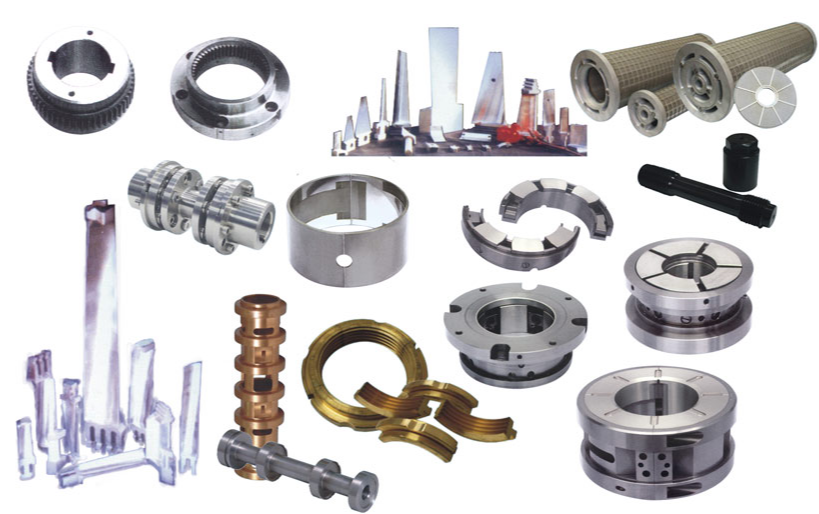
Saudi Arabia’s power sector is undergoing its most ambitious transformation since the oil boom of the 1970s. Vision 2030 has set a bold course — 50% of the Kingdom’s electricity from renewables by the end of the decade, expanded desalination capacity, and a modernized national grid capable of handling surge demand from a population of over 36 million. None of that infrastructure functions without precision-engineered replacement components, which is why the role of a specialized Power Plant Spare Parts Supplier Saudi Arabia has moved from a procurement footnote to a strategic priority. Operators managing gas turbines, steam cycles, combined-cycle blocks, and emerging solar thermal installations all share a single vulnerability: when critical components fail and replacements are unavailable, generation capacity drops and financial penalties mount. The suppliers capable of eliminating that vulnerability — through deep inventory, technical expertise, and logistics agility — are the ones shaping Saudi Arabia’s energy future.
The Scale of Saudi Arabia’s Power Generation Landscape
To appreciate why spare parts supply is so strategically significant here, consider the sheer scale of what Saudi Arabia operates. The Saudi Electricity Company (SEC) manages a generation portfolio exceeding 80 gigawatts of installed capacity, much of it concentrated in large gas-fired combined-cycle and open-cycle turbine stations scattered from Jubail on the Gulf coast to Yanbu on the Red Sea. Saudi Aramco’s captive power plants, industrial cogeneration units, and desalination facilities add substantial additional capacity on top of that base.
Gas turbines dominate the generation mix — GE Frame 6, 7, and 9 series machines alongside Siemens SGT and Mitsubishi M501/M701 units represent the workhorse fleet. These machines require scheduled maintenance intervals measured in fired hours and starts, not simply calendar time. Hot-section components such as combustion liners, transition pieces, first-stage nozzles, and turbine blades degrade predictably but must be replaced precisely on schedule to prevent forced outages. An idle turbine in peak summer — when Saudi demand crests as temperatures exceed 45°C — can cost an operator millions of riyals per day in penalties and spot-power purchases.
What Power Plant Operators in Saudi Arabia Ask Most
What spare parts categories does a power plant require most frequently?
The highest-turnover categories fall into four broad groups. First, hot-section turbine components — blades, vanes, combustion hardware, and shrouds — that face extreme thermal cycling. Second, rotating seals, bearings, and coupling elements that experience continuous mechanical stress. Third, instrumentation and control hardware: transmitters, thermocouples, actuators, and solenoid valves that require periodic replacement even when the turbine itself is running well. Fourth, balance-of-plant items including heat exchanger tubes, pump impellers, valve internals, and electrical switchgear components. A comprehensive supplier maintains deep stock across all four categories rather than specializing narrowly in just one.
How do suppliers ensure compatibility with OEM specifications in Saudi Arabia?
Reputable suppliers operate with documented material traceability — mill certificates, heat numbers, and dimensional inspection reports accompany every critical component. For turbine hot-section parts, metallurgical certification confirming alloy composition and heat-treatment parameters is standard. Many suppliers also maintain coordination agreements with OEMs or hold licensed manufacturing rights, allowing them to guarantee form-fit-function equivalence without simply reproducing parts from reverse engineering alone. Buyers should require full material documentation as a contract condition, not an optional extra.
What certifications should a Saudi Arabia-based spare parts supplier carry?
ISO 9001:2015 certification is the baseline. For hazardous-area electrical components, IECEx and ATEX approvals are essential given the prevalence of classified zones in petrochemical-adjacent power facilities. Suppliers serving Saudi Aramco projects must additionally demonstrate compliance with Aramco Engineering Standards (SAES), which impose requirements over and above international norms. SEC vendor qualification status is similarly important for suppliers targeting the national utility’s procurement cycles. Third-party inspection reports from agencies such as Bureau Veritas, SGS, or TUV Rheinland further validate quality claims.
Regional Supply Chain Dynamics Within the Kingdom
Eastern Province — Dammam, Jubail, and Al-Khobar
The Eastern Province is Saudi Arabia’s industrial heartland. Saudi Aramco’s headquarters in Dhahran, the Jubail Industrial City — the world’s largest petrochemical complex — and dozens of associated power facilities create the densest concentration of turbomachinery in the country. Suppliers with physical warehousing in Dammam’s King Abdul Aziz Port free-trade zone can clear customs faster and stage emergency deliveries within hours rather than days. This geographic advantage is decisive when an unplanned outage demands same-day parts.
Western Region — Jeddah, Yanbu, and Mecca
The western corridor supports power generation for the Hajj and Umrah pilgrimage infrastructure — perhaps the most politically sensitive operational requirement in the Kingdom. Any generation shortfall during peak pilgrimage season carries consequences far beyond commercial penalties. Suppliers servicing this corridor must demonstrate not only parts availability but rapid mobilization of field service personnel capable of working under compressed timelines and in proximity to religious sites with strict access protocols.
Central Region — Riyadh and Qassim
Riyadh’s explosive population growth and commercial construction boom have pushed the central grid’s peak demand to new records almost every summer. Combined-cycle stations ringing the capital require consistent maintenance supply chains. The Qassim region, expanding rapidly as an agricultural and light-industrial hub, adds gas turbine-driven generation stations that are farther from major ports and require reliable inland logistics networks from suppliers with established road freight capabilities.
How AI and Predictive Analytics Are Changing Spare Parts Procurement
The traditional model of spare parts procurement — maintaining large safety stocks based on historical failure rates and intuition — is giving way to data-driven approaches that reduce both capital tied up in inventory and the risk of critical shortages simultaneously. This shift has profound implications for what a forward-thinking supplier must offer.
Predictive maintenance platforms now integrate sensor data from vibration monitors, temperature transmitters, and performance analyzers to forecast component remaining useful life with increasing accuracy. When a first-stage turbine blade shows vibration signatures consistent with developing trailing-edge cracking, the platform flags a replacement need weeks in advance — long enough to procure parts through normal channels rather than emergency airfreight. Suppliers connected to these platforms via API can receive automated purchase signals and pre-position inventory before a formal purchase order is even raised.
Digital twin models take this further. A virtual replica of a specific turbine unit, fed with real-time operational data, can simulate how remaining component life changes under different loading profiles. If a plant operator decides to push a turbine harder during a grid emergency, the digital twin updates its replacement timeline accordingly and triggers a revised procurement signal. Suppliers that expose their inventory systems through open APIs — rather than requiring manual quotation requests — become natural partners in this automated procurement ecosystem.
Power Plant Spare Parts Supplier Saudi Arabia — Evaluation Criteria That Actually Matter
Procurement teams working under Vision 2030 timelines and SEC operational commitments cannot afford to learn a supplier’s weaknesses after contract award. Structured evaluation across the following dimensions separates reliable long-term partners from opportunistic vendors.
- Inventory depth and local stock: Does the supplier maintain physical stock inside the Kingdom, or do all orders originate from overseas? In-country stock eliminates import clearance time for urgent needs.
- OEM traceability documentation: Can the supplier provide full material certificates, dimensional inspection records, and — for turbine hot-section parts — metallurgical analysis reports for every component?
- Regulatory compliance portfolio: ISO 9001, IECEx/ATEX, SAES compliance, and SEC vendor qualification status should all be current and verifiable, not claimed without evidence.
- Emergency response capability: What is the guaranteed response time for critical unplanned outages? Is there a 24/7 operations centre staffed by engineers, not just order-taking agents?
- Field service integration: Can the supplier provide installation, commissioning, or on-site technical support alongside parts delivery, or is the relationship purely transactional?
- Digital procurement interface: Does the supplier offer an online portal, ERP integration, or API connectivity for inventory checks, order tracking, and automated replenishment?
- Financial stability and contract tenure: Long-term parts supply agreements require a supplier with the balance-sheet strength to maintain inventory commitments across multi-year contracts without disruption.
Total cost of ownership consistently favors suppliers that score well across all seven dimensions, even when their unit prices are not the lowest in a competitive tender. A single avoidable forced outage typically costs more than the annual price premium paid to a genuinely capable supplier.
Vision 2030, Renewable Integration, and the Evolving Parts Landscape
Saudi Arabia’s renewable energy program — spearheaded by NEOM, the Red Sea Project, and REPDO’s expanding solar and wind auction rounds — is adding new equipment categories to the spare parts landscape. Solar inverters, tracker drives, combiner boxes, and offshore wind subcomponent kits are entering procurement catalogues alongside the established turbine hardware. The most forward-positioned suppliers are already building inventory positions in these new categories rather than waiting for demand to arrive.
Hydrogen co-firing programs, which Saudi Aramco and SEC are piloting at several existing gas turbine stations, introduce additional materials challenges. Combustion hardware designed for natural gas requires metallurgical modification to tolerate elevated hydrogen content, and suppliers that understand the differences — in alloy selection, coating chemistry, and inspection intervals — will capture the lion’s share of this emerging retrofit market.
For plant operators navigating this transitional period, the most valuable supplier relationship is one that bridges legacy turbine maintenance with emerging clean-energy hardware — a single procurement relationship that covers both the 30-year-old GE Frame 7 currently handling base load and the battery storage inverters being commissioned alongside it.
Closing Perspective
Saudi Arabia’s energy ambitions are written in gigawatts and governed by deadlines tied to the Kingdom’s most consequential national strategy. Every turbine that trips unexpectedly, every pump that fails ahead of schedule, and every valve that cannot be replaced in time represents a measurable setback against those ambitions. The spare parts supply chain is not a back-office function — it is a front-line enabler of national energy security.
Suppliers that combine deep technical knowledge, in-Kingdom logistics infrastructure, rigorous certification, and genuine digital procurement capability are the ones that will earn and keep the trust of Saudi Arabia’s most demanding power plant operators over the decade ahead. The conversation is no longer simply about having the right part. It is about having it in the right place, with the right documentation, at the precise moment it is needed.