







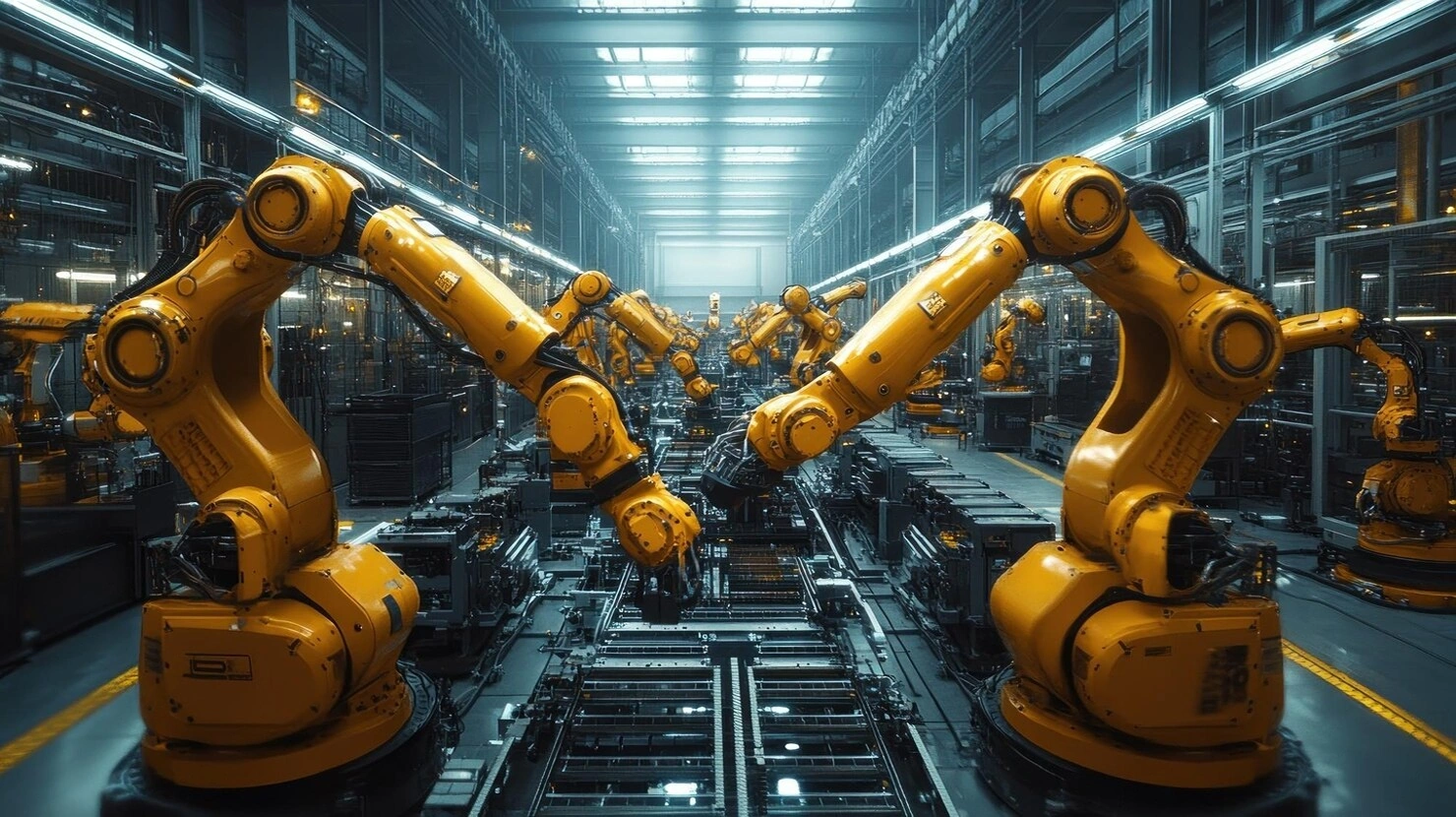
Transforming Indian Manufacturing Through Smart Automation
India is witnessing a major shift in the way industries operate. Driven by the Make in India initiative, growing global competition, rising labor costs, and the demand for higher productivity, manufacturers are increasingly adopting industrial robotic automation solutions to modernize their operations.
From automotive production plants in Pune and Chennai to pharmaceutical manufacturing facilities in Hyderabad and electronics hubs in Bengaluru, robotic automation is helping businesses improve efficiency, reduce costs, and maintain consistent product quality. What was once considered advanced technology is now a critical investment for companies aiming to remain competitive in domestic and international markets.
Industrial robotics has become a key pillar of Industry 4.0, enabling smart factories that leverage artificial intelligence, machine vision, data analytics, and connected systems to optimize manufacturing processes. As India’s manufacturing sector continues to expand, robotic automation is creating new opportunities for innovation, scalability, and sustainable growth.
What Is Industrial Robotic Automation?
Industrial robotic automation refers to the use of programmable robotic systems and intelligent machines to perform manufacturing and industrial tasks with minimal human intervention. These systems are designed to handle repetitive, labor-intensive, hazardous, and precision-based operations more efficiently than manual processes.
Modern industrial robots incorporate advanced technologies such as:
- Artificial Intelligence (AI)
- Machine Learning
- Machine Vision Systems
- Internet of Things (IoT)
- Advanced Sensors
- Real-Time Process Monitoring
These technologies allow robots to perform complex tasks with high accuracy, adapt to changing production requirements, and work safely alongside human operators.
Industrial robotic automation is commonly used for:
- Welding and fabrication
- Material handling
- Assembly operations
- Packaging and palletizing
- Quality inspection
- Machine tending
- Painting and coating
- Warehouse automation
By automating these processes, businesses can increase productivity, improve quality standards, and reduce operational costs.
Key Industrial Robotic Automation Solutions Available in India
Robotic Arms and Manipulators
Robotic arms are among the most widely deployed automation systems in manufacturing. They are capable of performing tasks such as welding, assembly, material handling, cutting, painting, and packaging with exceptional precision.
Industries such as automotive manufacturing, metal fabrication, aerospace, and heavy engineering rely heavily on robotic arms to achieve consistent production quality and higher throughput.
Collaborative Robots (Cobots)
Collaborative robots, commonly known as cobots, are designed to work safely alongside human workers. Equipped with advanced safety sensors and intelligent control systems, cobots can share workspaces without requiring extensive safety barriers.
Cobots are especially beneficial for:
- Small and medium-sized enterprises (SMEs)
- Flexible manufacturing environments
- Low-volume, high-mix production
- Assembly and packaging operations
Their ease of deployment and lower investment requirements make them one of the fastest-growing segments in industrial automation.
Autonomous Mobile Robots (AMRs)
Autonomous Mobile Robots navigate independently throughout manufacturing facilities and warehouses. Unlike traditional automated guided vehicles (AGVs), AMRs do not require fixed paths or tracks.
These robots are commonly used for:
- Material transportation
- Warehouse logistics
- Inventory movement
- Production line support
AMRs improve operational efficiency while reducing manual material handling efforts.
Machine Vision and Inspection Systems
AI-powered machine vision systems use cameras and image-processing software to inspect products in real time.
Applications include:
- Defect detection
- Surface inspection
- Dimensional verification
- Barcode reading
- Product sorting
Machine vision technology significantly improves quality control and reduces the risk of defective products reaching customers.
CNC and Process Automation
Computer Numerical Control (CNC) automation enables highly accurate machining and manufacturing processes.
Industries benefiting from CNC automation include:
- Aerospace
- Defense
- Medical device manufacturing
- Precision engineering
- Tool and die production
Automated CNC systems improve accuracy, consistency, and production efficiency.
Packaging and Palletizing Robots
Packaging automation solutions streamline end-of-line operations by automating:
- Product packaging
- Case packing
- Labeling
- Palletizing
- Sorting
These systems are widely used in food processing, pharmaceuticals, FMCG manufacturing, and logistics operations.
Industries Driving Robotic Automation Adoption in India
Automotive and Electric Vehicle Manufacturing
The automotive sector remains the largest adopter of industrial robotics in India. Leading manufacturers utilize robotic systems for:
- Spot welding
- Arc welding
- Body assembly
- Painting
- Material handling
As electric vehicle production continues to expand, robotics is playing a crucial role in battery manufacturing and assembly processes.
Pharmaceutical and Life Sciences
Pharmaceutical companies require high levels of precision, consistency, and contamination control. Robotic automation supports:
- Vial filling
- Packaging
- Inspection
- Laboratory automation
- Material handling
Automation helps pharmaceutical manufacturers comply with strict regulatory standards while improving production efficiency.
Electronics and Semiconductor Manufacturing
The electronics industry demands micron-level precision and high-speed production capabilities.
Industrial robots are extensively used for:
- PCB assembly
- Micro-soldering
- Component placement
- Product testing
- Packaging
Robotic automation ensures consistent quality and higher production output.
Food and Beverage Processing
Food manufacturers increasingly rely on robotics for the following:
- Sorting
- Cutting
- Packaging
- Labeling
- Palletizing
Automation enhances food safety, improves hygiene standards, and increases production efficiency.
Textile and Apparel Manufacturing
India’s textile industry is embracing automation to improve productivity and reduce manufacturing costs.
Applications include:
- Automated cutting
- Fabric handling
- Quality inspection
- Packaging
These technologies help manufacturers remain competitive in global markets.
Warehousing and Logistics
The rapid growth of e-commerce has accelerated automation adoption across warehouses and distribution centers.
Robotic systems are used for:
- Order fulfillment
- Inventory management
- Sorting
- Picking and packing
Warehouse automation improves accuracy while reducing operational costs.
Benefits of Industrial Robotic Automation
Businesses implementing robotic automation often experience measurable improvements across key performance indicators.
1. Increased Productivity
Industrial robots operate continuously without fatigue, significantly increasing production output.
2. Improved Product Quality
Automation minimizes human error and ensures consistent manufacturing standards.
3. Reduced Operational Costs
Although automation requires an initial investment, long-term savings are achieved through reduced labor costs, lower waste, and improved efficiency.
4. Enhanced Workplace Safety
Robots can safely perform hazardous tasks, reducing workplace accidents and injuries.
5. Faster Return on Investment
Many automation projects achieve ROI within 18 to 36 months through increased productivity and reduced operating expenses.
6. Scalability and Flexibility
Modern robotic systems can be reprogrammed to accommodate new products and changing production requirements.
7. Better Regulatory Compliance
Automation helps manufacturers meet industry-specific quality and safety standards.
Leading Industrial Robotic Automation Companies in India
Several global and domestic companies are driving innovation in India’s automation sector.
1. ABB India
Provides industrial robots, motion control systems, and smart automation solutions.
2. FANUC India
Offers robotic systems, CNC automation, and intelligent manufacturing solutions.
3. Yaskawa India
Specializes in welding robots, servo systems, and motion control technologies.
4. Gridbots Technologies
Develops AI-powered robotic inspection and automation solutions for industrial applications.
5. Tata Advanced Systems
Provides automation technologies for aerospace, defense, and advanced manufacturing sectors.
6. Hi-Tech Robotic Systemz
Focuses on autonomous mobile robots and warehouse automation solutions.
Government Initiatives Supporting Industrial Automation
Make in India
The Make in India program encourages manufacturers to invest in advanced technologies and expand domestic production capabilities.
1. Production Linked Incentive (PLI) Schemes
PLI schemes support manufacturing growth across multiple sectors and encourage technology upgrades, including automation.
2. National Industrial Corridor Programme
The development of smart industrial corridors is creating modern manufacturing ecosystems equipped for automation and Industry 4.0 technologies.
3. National Robotics and AI Initiatives
Government-supported programs promote robotics research, skill development, innovation, and indigenous technology development.
Future Trends in Industrial Robotic Automation
1. AI-Powered Robotics
Artificial intelligence is enabling robots to learn, adapt, and optimize processes with minimal human intervention.
2. Smart Factories and Industry 4.0
Connected manufacturing systems are integrating robotics, IoT devices, cloud computing, and real-time analytics.
3. Sustainable Manufacturing
Energy-efficient automation technologies are helping manufacturers reduce waste and achieve sustainability goals.
4. Robotics-as-a-Service (RaaS)
Subscription-based robotic solutions are making automation accessible to small and medium-sized businesses.
5. Digital Twins
Virtual models of manufacturing systems allow businesses to simulate, monitor, and optimize operations before implementation.
Frequently Asked Questions
1. Is robotic automation suitable for small businesses in India?
Yes. Collaborative robots, modular automation systems, and Robotics-as-a-Service models have made automation affordable for SMEs.
2. How long does it take to implement robotic automation?
Simple automation projects can be deployed within a few weeks, while large-scale manufacturing automation projects may take several months.
3. Which industries benefit most from robotic automation?
Automotive, pharmaceuticals, electronics, food processing, logistics, aerospace, and textiles are among the leading sectors adopting automation.
4. What is the return on investment for industrial robots?
ROI varies depending on the application but is commonly achieved within 18 to 36 months through productivity improvements and cost savings.
5. Are robotic systems safe to operate?
Yes. Modern robots incorporate advanced safety technologies and are designed to operate safely in industrial environments.
Conclusion
Industrial robotic automation is reshaping the future of manufacturing in India. As industries strive to improve productivity, quality, and competitiveness, automation has become a strategic investment rather than an optional upgrade.
Whether you are a large-scale manufacturer seeking complete factory automation or a growing business exploring robotic solutions for the first time, adopting automation today can create long-term operational advantages and sustainable growth.
Ready to Automate Your Production Line?
Partner with experienced industrial automation specialists to design, integrate, and support robotic solutions tailored to your manufacturing requirements. Unlock higher productivity, improved quality, and smarter operations with advanced industrial robotic automation solutions in India.